


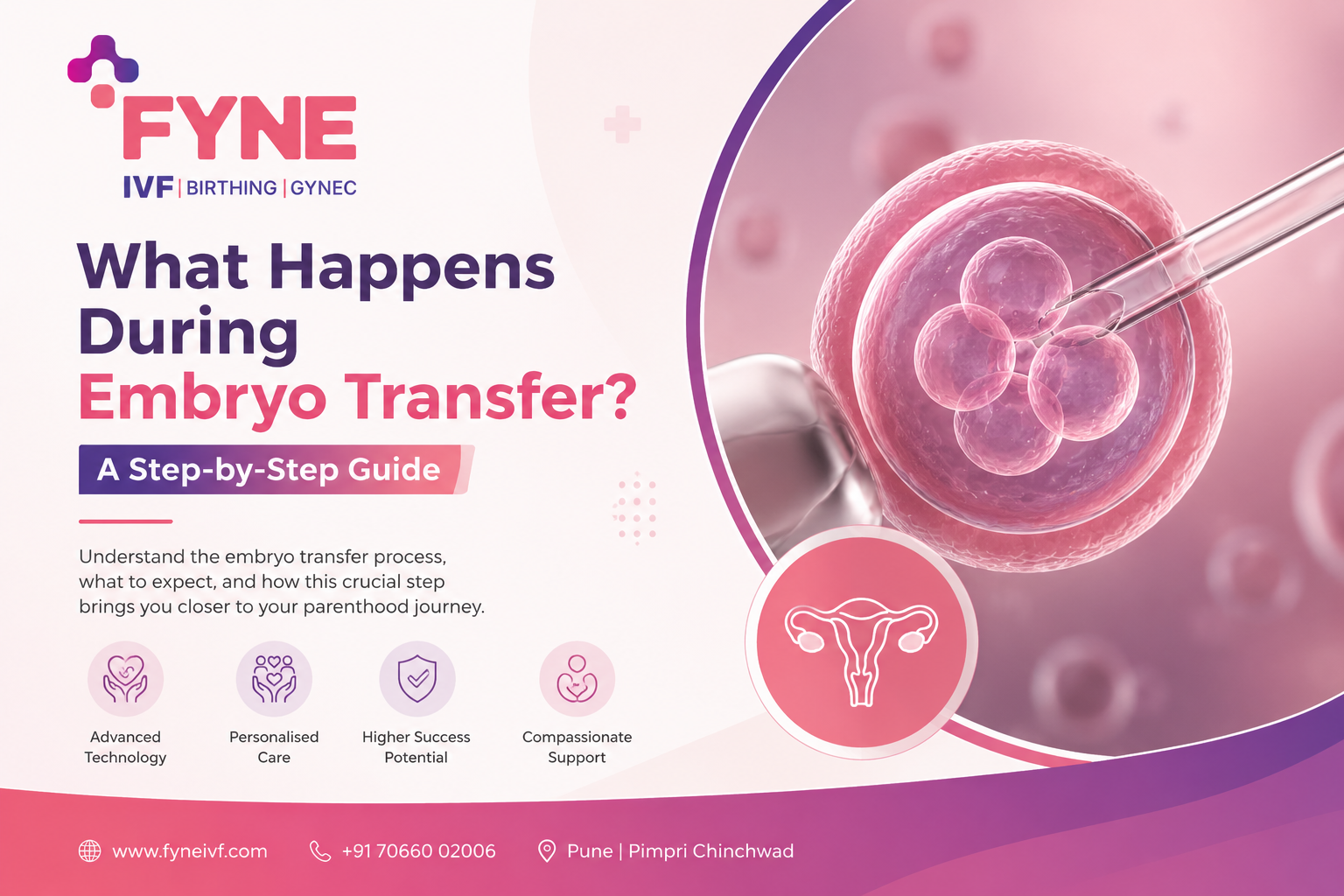
Embryo transfer is one of the most important stages of the IVF journey. After days of monitoring fertilisation and embryo development in the laboratory, the selected embryo is carefully placed into the uterus with the goal of achieving a successful pregnancy.
For many couples, this stage can bring a mix of excitement, nervousness, and anticipation. Understanding what happens during embryo transfer can help reduce anxiety and make the process feel more comfortable and reassuring.
Although embryo transfer is a relatively quick and minimally invasive procedure, every step is carefully planned to improve the chances of implantation and pregnancy success.
Understanding Embryo Transfer
Embryo transfer is the process of placing a fertilised embryo into the uterus during an IVF cycle. The procedure is usually performed a few days after egg retrieval and fertilisation.
Depending on embryo development, transfer may happen:
- On Day 3 (cleavage stage embryo)
- On Day 5 or 6 (blastocyst stage embryo)
Most fertility specialists prefer transferring a healthy blastocyst because it generally has a higher implantation potential.
Preparing for Embryo Transfer
Before the transfer procedure, the uterus is prepared to support implantation.
This preparation may involve:
- Hormonal medications to thicken the uterine lining
- Ultrasound monitoring
- Blood tests to check hormone levels
A healthy endometrial lining is important for successful implantation.
Patients are usually advised to:
- Stay hydrated
- Avoid unnecessary stress
- Follow medication schedules carefully
Step-by-Step: What Happens During Embryo Transfer
1. Embryo Selection
Before the procedure, embryologists carefully evaluate embryo quality.
They assess:
- Cell division pattern
- Symmetry
- Fragmentation
- Blastocyst development
The healthiest embryo with the best implantation potential is selected for transfer.
2. Preparing for the Procedure
Embryo transfer is generally performed without anaesthesia because the procedure is usually painless.
Patients may be asked to:
- Arrive with a moderately full bladder
- Wear comfortable clothing
- Avoid perfumes or strong fragrances inside the IVF laboratory environment
A full bladder helps improve ultrasound visibility during the procedure.
3. Placement of the Embryo
During the transfer:
- A thin, flexible catheter containing the embryo is gently inserted through the cervix into the uterus
- Ultrasound guidance is used for accurate placement
- The embryo is carefully released into the uterine cavity
The procedure typically takes only a few minutes.
Most patients experience little to no discomfort, although mild cramping may occur in some cases.
4. Rest After the Procedure
After embryo transfer, patients are usually advised to rest briefly at the clinic before returning home.
However, prolonged bed rest is generally not required unless specifically recommended by the fertility specialist.
Patients can usually resume light daily activities while avoiding:
- Heavy exercise
- Strenuous physical activity
- Smoking and alcohol
What Happens After Embryo Transfer
After transfer, the embryo begins the implantation process.
If implantation is successful:
- The embryo attaches to the uterine lining
- Pregnancy hormones begin increasing
- Early pregnancy development starts
This phase is often called the “two week wait” because patients typically wait around 10 to 14 days before taking a pregnancy test.
Common Symptoms After Embryo Transfer
Some individuals may experience mild symptoms after the procedure, while others may notice none at all.
Possible symptoms include:
- Mild cramping
- Light spotting
- Breast tenderness
- Fatigue
- Bloating
It is important to remember that symptoms alone do not confirm or rule out pregnancy.
Factors That Influence Embryo Transfer Success
Several factors can affect implantation and pregnancy outcomes.
Embryo Quality
Healthy embryos generally have higher implantation potential.
Uterine Lining Health
A receptive endometrium supports successful implantation.
Maternal Age
Age plays a major role in egg quality and embryo development.
Lifestyle Factors
Smoking, stress, poor sleep, and unhealthy habits may affect IVF outcomes.
Fertility Clinic Expertise
Advanced embryology laboratories and experienced fertility specialists can improve treatment success rates.
Tips for a Healthy Recovery After Embryo Transfer
While there is no guaranteed method to improve implantation, healthy habits can support overall reproductive health.
Follow Medication Instructions Carefully
Continue prescribed medications exactly as advised.
Avoid Excessive Stress
Emotional stress may increase anxiety during the waiting period.
Maintain a Healthy Lifestyle
Eat balanced meals, stay hydrated, and get adequate rest.
Avoid Self Monitoring Symptoms Constantly
Every IVF journey is different, and symptoms vary widely between individuals.
When Should You Contact Your Fertility Specialist
Seek medical advice if you experience:
- Severe abdominal pain
- Heavy bleeding
- Fever
- Difficulty breathing
- Severe bloating or discomfort
Although complications are uncommon, prompt medical evaluation is important if concerning symptoms develop.
Understand the Embryo Transfer Journey with Confidence
Understanding what happens during embryo transfer can help reduce uncertainty and make the IVF process feel more manageable. While the procedure itself is simple and usually painless, it plays a crucial role in the success of fertility treatment.
At Fyne IVF, our fertility specialists and embryology team focus on personalised care, advanced reproductive technology, and careful embryo selection to support the best possible outcomes for every patient. From embryo development to transfer and beyond, every step is guided with precision and compassion.
Book your consultation today and take the next step in your fertility journey with expert support and trusted care.
FAQs
1. Is embryo transfer painful?
Embryo transfer is usually painless, though some individuals may experience mild discomfort or cramping.
2. How long does embryo transfer take?
The actual procedure generally takes around 10 to 15 minutes.
3. Can I walk after embryo transfer?
Yes, light walking and routine daily activities are usually allowed unless advised otherwise.
4. How soon can pregnancy be confirmed after embryo transfer?
A pregnancy test is typically done 10 to 14 days after the procedure.
5. What should I avoid after embryo transfer?
Avoid heavy exercise, smoking, alcohol, and unnecessary physical strain during the recovery period.