

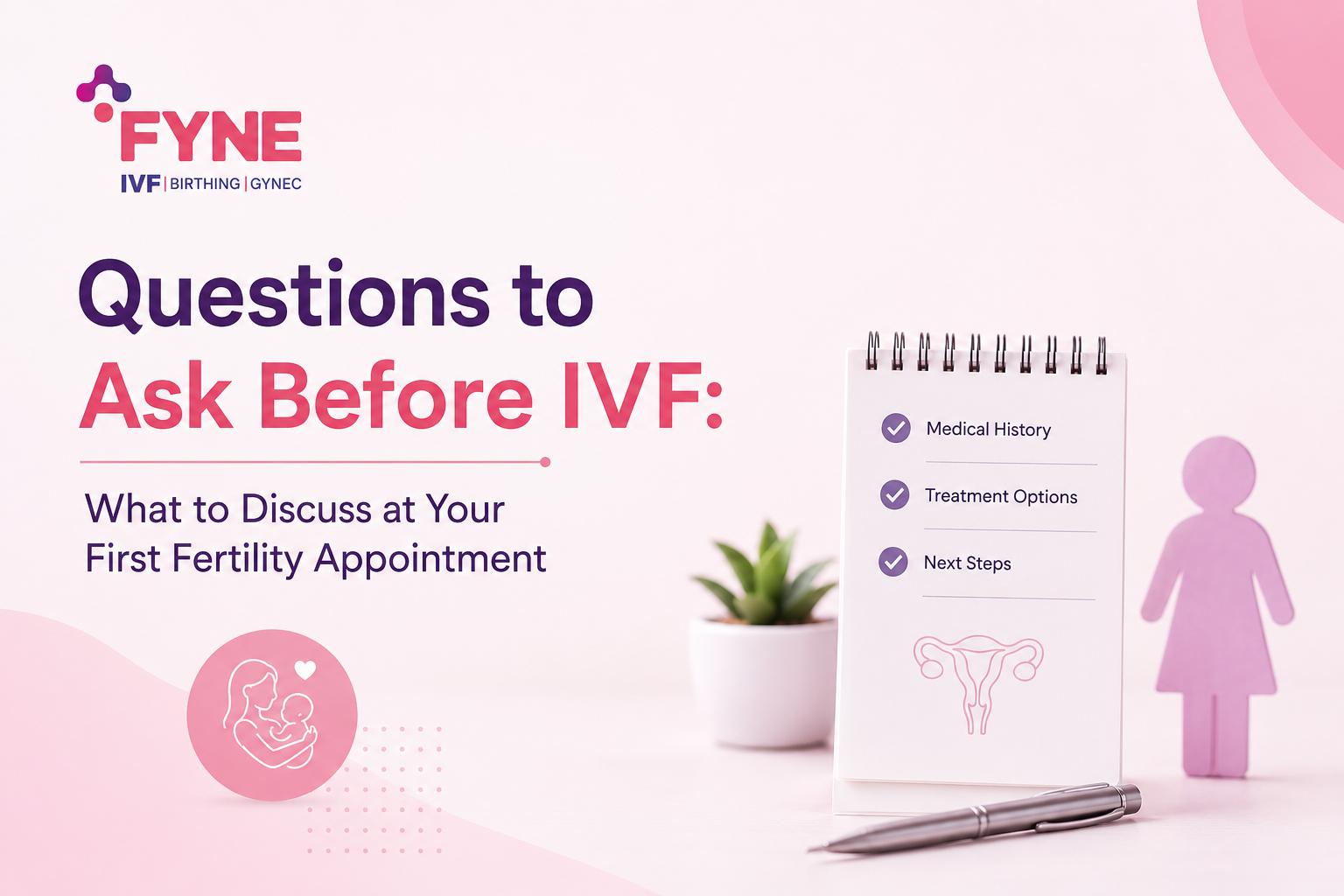
The first IVF consultation can feel emotional, hopeful, and overwhelming at the same time. Many couples remember important questions only after leaving the clinic, especially when they are trying to understand tests, treatment options, success chances, and costs.
Knowing the right questions to ask before IVF can help you feel more prepared and confident during your first fertility visit. This guide covers practical questions to ask at first fertility appointment so you can understand your diagnosis, treatment plan, and next steps more clearly.
Why Your First Fertility Appointment Matters
Your first fertility appointment helps the doctor understand your complete reproductive history. This may include age, menstrual cycle pattern, duration of trying to conceive, previous pregnancy history, fertility reports, semen parameters, medical conditions, medicines, lifestyle factors, and previous treatments.
This visit is also important because IVF may not be the first option for every couple. Depending on the cause of infertility, the doctor may discuss timed intercourse, ovulation induction, IUI, IVF, ICSI, or other fertility treatments.
A clear first consultation can help reduce confusion and make the treatment journey more structured.
Questions to Ask Before IVF
1. What Could Be the Reason We Are Not Conceiving?
This is one of the most important questions to ask before IVF. Infertility may be linked to female factors, male factors, or a combination of both. In some cases, reports may appear normal and the cause may be unexplained.
Ask your doctor about possible factors such as ovulation problems, low egg reserve, blocked fallopian tubes, endometriosis, fibroids, uterine concerns, sperm count, sperm motility, sperm shape, age-related fertility decline, lifestyle factors, or PMOS, earlier known as PCOS.
Understanding the likely cause helps couples know why a particular treatment is recommended.
2. What Tests Do We Need Before Starting Treatment?
Fertility treatment should begin with proper evaluation. Ask which tests are needed before deciding on IVF or any other treatment.
Common tests may include ovarian reserve testing, hormone tests, ultrasound, semen analysis, tubal evaluation, infection screening, thyroid testing, and other investigations based on medical history.
Both partners may need testing. Male fertility evaluation is important because sperm factors can directly influence treatment planning.
3. Is IVF the Right Treatment for Us Now?
Not every couple needs IVF immediately. Ask your doctor whether IVF is the best next step or whether other options may be considered first.
Treatment may depend on age, diagnosis, duration of infertility, semen report, egg reserve, tubal status, previous IUI or IVF attempts, and medical conditions.
In some cases, ICSI may be recommended along with IVF, especially if there are sperm-related concerns. In others, ovulation induction or IUI may be suitable before IVF.
4. What Are Our Chances of Success?
IVF success depends on many factors. Ask your doctor what may affect your individual chances.
Important factors include age, egg quality, sperm quality, embryo quality, uterine lining, ovarian response, medical conditions, previous IVF history, and lifestyle habits.
No clinic can guarantee pregnancy, but a fertility specialist can explain realistic expectations based on your reports and treatment plan.
5. What Will the IVF Process Involve?
Many couples feel less anxious when they understand the steps of treatment. Ask your doctor to explain the IVF process in simple terms.
The process may include ovarian stimulation, monitoring scans, trigger injection, egg retrieval, sperm collection, fertilisation, embryo culture, embryo transfer, and pregnancy testing.
You can also ask how many visits may be needed, whether injections are self-administered, how long the process may take, and what precautions are required after embryo transfer.
6. Are There Any Risks or Side Effects?
IVF is commonly performed, but like any medical treatment, it may involve side effects or risks. Ask your doctor what to expect and when to seek help.
Possible concerns may include injection-related discomfort, bloating, mood changes, ovarian hyperstimulation risk, multiple pregnancy risk, procedure-related discomfort, and emotional stress.
Risks vary from patient to patient. A personalised discussion helps you understand what applies to your case.
7. What Lifestyle Changes Should We Make?
Lifestyle changes may support fertility treatment. Ask your doctor whether you need changes in diet, weight, sleep, exercise, smoking, alcohol intake, stress management, or medicine use.
Both partners should be involved. Male fertility health also matters, and sperm quality may be affected by smoking, alcohol, stress, obesity, poor sleep, and certain health conditions.
If needed, nutritional counselling or fertility counselling can help couples prepare better for treatment.
8. What Will the Cost Include?
Cost is an important part of IVF planning. Ask what the estimated cost includes and what may be charged separately.
This may include consultation, medicines, scans, blood tests, egg retrieval, anaesthesia, lab procedures, embryo culture, ICSI if needed, embryo freezing, storage, embryo transfer, and follow-up.
Transparent cost discussion helps couples avoid confusion later.
9. What Happens If the First IVF Cycle Does Not Work?
This can be a difficult question, but it is important. Ask how the treatment will be reviewed if the first cycle does not result in pregnancy.
The doctor may assess ovarian response, egg quality, sperm factors, fertilisation, embryo development, embryo quality, endometrial lining, transfer details, and any medical concerns.
A failed cycle does not always mean IVF cannot work. Sometimes, treatment protocols are adjusted based on what is learned from the previous cycle.
What to Carry to Your First Fertility Appointment
Carry all previous fertility records so the doctor can understand your history better.
Useful documents include:
- Previous fertility reports
- Menstrual history details
- Ultrasound reports
- Hormone test reports
- Semen analysis reports
- Previous IUI or IVF records
- Surgery records if any
- Medical history and current medicine list
It is helpful if both partners attend the first visit, as fertility evaluation often involves both male and female factors.
Final Thoughts
Asking the right questions before IVF can help reduce confusion and support better decision-making. Your first fertility consultation is not only about starting treatment; it is about understanding your diagnosis, options, expectations, and preparation.
If you are planning your first fertility appointment, Fyne IVF, Pune, can help with fertility evaluation, IVF guidance, counselling, and personalised treatment planning for your parenthood journey.