Tag: IVF and Egg Donation

  • Indira IVF vs FYNE IVF: Which Clinic Is Better for You in Pune?

    Indira IVF vs FYNE IVF: Which Clinic Is Better for You in Pune?

    Choosing a clinic matters. You should pick a center that fits your health needs, budget, and comfort level. Below is a clear, side-by-side comparison of Indira IVF and Fyne IVF in Pune.

    Quick summary

    • Indira IVF is a large national chain. It has many centres and standardised processes.
    • Fyne IVF is a local clinic in Pune that focuses on personalised care and transparency.
    • If you want a big network, pick Indira. If you want close doctor contact and local support, pick Fyne.

    Services offered

    Both clinics offer common fertility services. Here are the main ones.

    ServiceIndira IVFFyne IVF
    IVF (standard)YesYes
    ICSIYesYes
    IUIYesYes
    Egg freezingYesYes
    Donor eggs / donor spermYesYes
    Genetic testing (PGT)YesYes
    Counselling & mental health supportBasicDedicated support

    Success rates (approximate)

    Success rates vary by age, diagnosis, and lab factors. These numbers are estimates to help comparison.

    Age groupIndira IVF (approx)Fyne IVF (approx)
    < 30 years65–70%70–75%
    30–35 years55–65%60–70%
    35+ years45–55%50–60%

    Fyne shows slightly higher figures in these estimates. That advantage comes from smaller patient loads and more tailored protocols.

    Cost comparison

    Costs depend on tests, medicines, and add-ons. These ranges reflect common pricing brackets in Pune clinics.

    Fyne tends to list clearer base prices and fewer surprise add-ons. Ask each clinic for a full written breakdown before you commit.

    Patient experience and access

    • Indira IVF: strong brand, many centres, standard processes. You may meet different staff across visits. Wait times can be longer at some branches.
    • Fyne IVF: smaller team, consistent doctor contact, and more counselling time per visit. The clinic focuses on one-to-one care.

    Lab and technology

    Both clinics use modern embryology labs and standard ART techniques. Indira’s advantage lies in scale and protocol uniformity. Fyne’s advantage lies in lab attention for individual cases and closer embryologist-doctor coordination.

    Who should choose which clinic?

    • Choose Indira IVF if you prefer a large, national network and wide geographic access. You get standardised protocols and many branches.
    • Choose Fyne IVF if you want personalised plans, clearer pricing, and closer doctor involvement through your treatment.

    Do you need help picking based on your case? Share age, prior cycles, and main diagnosis, and I will map which clinic strengths match your situation.

    Next steps before you decide

    • Ask both clinics for a written price sheet and list of inclusions.
    • Request recent success data for patients in your exact age group.
    • Ask how many patients the lead doctor treats weekly. Lower caseload means more time for you.
    • Verify lab accreditation and embryologist experience.

    Quick FAQs

    Q: Which clinic is cheaper on average?
    A: Fyne IVF often lists lower base prices and fewer hidden costs. Ask both clinics for a full quote.

    Q: Does clinic size affect success?
    A: Clinic size does not determine success by itself. Smaller clinics can offer more tailored care. Larger chains offer standardised protocols and wider reach.

    Q: How do I verify success rates?
    A: Request recent case data by age group and treatment type. Ask for clinic audit reports or outcome summaries.
  • Fresh vs. Frozen Embryo Transfers: Which One is Better for IVF Success?

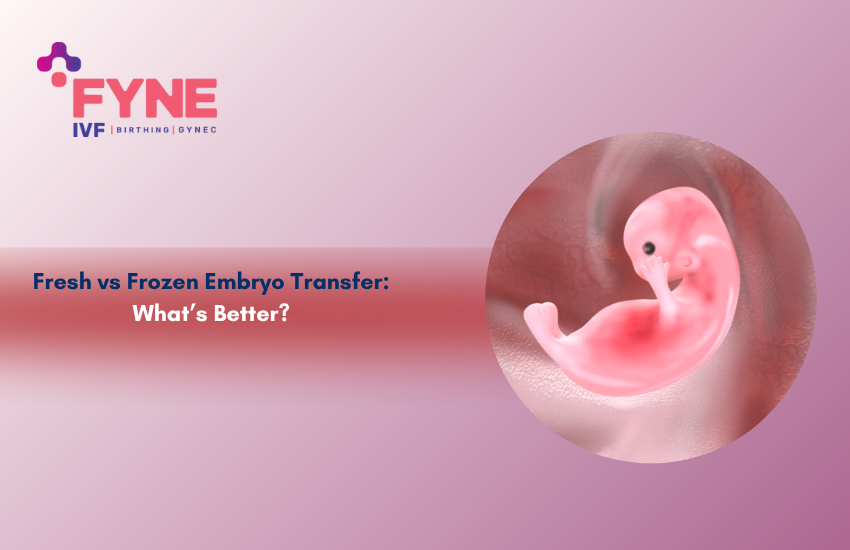
    Fresh vs. Frozen Embryo Transfers: Which One is Better for IVF Success?

    Choosing IVF as a path to parenthood can be one of the most significant decisions you make, and with it comes many questions about the best approach to treatment. Among these decisions, one of the most important is whether to go for a fresh or frozen embryo transfer. Each option has its benefits and considerations, and understanding the differences can feel overwhelming.
    The decision you make will depend on your unique circumstances, whether you’re looking for a faster route to parenthood or more time for your body to prepare. This blog aims to guide you through both options, helping you feel more confident as you navigate your IVF journey.

    What is a Fresh Embryo Transfer?

    A fresh embryo transfer occurs during the same IVF cycle as the egg retrieval and fertilisation. After fertilising the eggs in the lab, the embryos are transferred directly into the uterus.

    When it’s Typically Done

    Fresh embryo transfers are usually performed 3 to 5 days after fertilisation when the embryos have developed to the blastocyst stage.

    Pros:

    • Faster IVF cycle: You don’t have to wait for another cycle, which can be appealing for those who want a quicker route to pregnancy.
    • No freezing costs: There are no additional expenses for freezing or storing embryos.

    Cons:

    • Hormonal stimulation effects: The medications used for egg retrieval and fertilisation may affect the uterus, potentially making it less receptive to implantation.

    What is a Frozen Embryo Transfer (FET)?

    A frozen embryo transfer involves thawing embryos that were frozen during an earlier IVF cycle and transferring them into the uterus in a subsequent cycle. This allows for more time to prepare both the body and the embryos.

    Process of Thawing and Transfer

    Embryos are carefully thawed before being transferred into the uterus. This process typically happens after the uterus is prepared, often using hormone treatments to optimise the chances of implantation.

    Pros:

    • More time for the body to recover: The body has time to return to its natural state between cycles, which can improve the chances of a successful pregnancy.
    • Better endometrial preparation: Without the hormonal effects from the IVF cycle, the uterus may be more receptive to the embryo.

    Cons:

    • Additional waiting period: Since the embryos are stored and thawed, there’s an extra step involved before transfer.
    • Cost of freezing and storage: There are additional costs for freezing and storing embryos for later use.

    Fresh vs. Frozen: IVF Success Rates

    Studies have shown that frozen embryo transfers (FET) have higher live birth rates than fresh transfers, i.e. FET: 28.62% vs. Fresh: 19.23% (study of 2,872 women). However, the choice between fresh and frozen depends on several factors such as age, embryo quality, and uterine health.

    Factors Influencing Success:

    • Age: Younger women typically experience higher success rates with both types of transfers.
    • Embryo Quality: High-quality embryos are more likely to lead to successful pregnancies, regardless of whether they are fresh or frozen.
    • Uterine Health: The ability of the uterus to accept an embryo is crucial for implantation. FET allows more time to prepare the uterus and ensure it’s in the best condition for implantation.

    Which Is Better for You?

    The decision between a fresh or frozen embryo transfer depends on several factors unique to each person. Consider the following:

    • PCOS or Hormonal Imbalances: If you have PCOS or irregular hormone levels, a frozen embryo transfer may provide better control over your hormone environment.
    • Uterine Lining Issues: If your uterus hasn’t had enough time to develop or is not in the optimal condition for implantation, FET could allow for better preparation.
    • Emotional & Financial Considerations: Fresh transfers may seem more convenient and cost-effective, but FET might offer better long-term success. Be sure to consider both the emotional and financial implications of your choice.

    Expert Advice

    Consulting a fertility expert can provide insight into your unique situation, helping you determine which option is best for you. Your doctor will consider your age, health conditions, hormonal balance, and embryo quality to help guide your decision. Personalised IVF treatment plans, whether for a fresh or frozen embryo transfer, are key to maximising your chances of success.

    Summing It Up: Finding the Right Path to Parenthood

    Both fresh and frozen embryo transfers offer distinct advantages, and the best choice depends on various factors like hormonal health, age, and embryo quality. While FET has become increasingly popular due to its higher success rates and improved conditions for embryo implantation, fresh embryo transfer can also be an effective option for women who prefer a quicker path to pregnancy.
    If you’re considering IVF or want more information about fresh vs. frozen embryo transfers, reach out to FYNE IVF today for a consultation. Our expert team will guide you through the decision-making process and help you choose the best option tailored to your fertility needs.

  • What Every Woman Should Know About Ovarian Reserve & Egg Freezing

    What Every Woman Should Know About Ovarian Reserve & Egg Freezing

    Fertility is often not something women think about until they’re ready to start a family. However, ovarian reserve, the number of eggs in a woman’s ovaries, plays a critical role in determining fertility potential. Whether you’re considering starting a family now or planning for the future, understanding your ovarian reserve and options like egg freezing can provide valuable insights into your reproductive health.

    In this blog, we’ll explore the importance of ovarian reserve, the role of egg preservation, and the process of freezing eggs and embryos, empowering you to make informed decisions for your future family planning.

    What is an Ovarian Reserve?

    Ovarian reserve refers to the number and quality of eggs a woman has in her ovaries. It plays a major role in determining fertility, as a woman is born with a finite number of eggs that decrease in both quantity and quality over time.

    As women age, their ovarian reserve naturally decreases, which can affect the chances of conception. Ovarian reserve is typically assessed through blood tests measuring hormone levels (such as AMH and FSH) and ultrasound, along with other fertility assessments.

    How It Impacts Fertility and Reproductive Planning

    A woman’s ovarian reserve can impact:

    • Fertility potential: Lower ovarian reserve can make conception more difficult.
    • Response to fertility treatments: Women with a reduced ovarian reserve may have fewer eggs to retrieve during IVF cycles.
    • Timeframe for family planning: A low ovarian reserve might indicate a shorter fertility window, prompting earlier family planning.

    Signs of Diminished Ovarian Reserve and When to Get Tested

    While ovarian reserve naturally decreases with age, certain factors can accelerate the process. Some signs of diminished ovarian reserve include:

    • Difficulty getting pregnant
    • Irregular or missed periods
    • Early menopause in the family
    • History of medical treatments that may impact fertility (e.g., chemotherapy)

    If you are in your late 20s or early 30s and are considering delaying pregnancy, it may be wise to get tested for ovarian reserve. Early testing provides valuable information, helping you make informed choices about your reproductive health.

    The Role of Egg Preservation

    Egg preservation (or egg freezing) is the process of harvesting, freezing, and storing a woman’s eggs for future use. This allows women to delay pregnancy and safeguard fertility until a time when they feel ready. Women may choose to freeze their eggs for various reasons, including:

    • Age-related fertility decline: Women in their late 20s or early 30s may freeze eggs to preserve fertility before it naturally declines.
    • Medical reasons: Women facing treatments like chemotherapy or radiation that can affect ovarian function may use egg freezing as a method to preserve their fertility.
    • Lifestyle reasons: Women who wish to delay having children for career, relationship, or personal reasons may choose egg preservation as an option to ensure they have healthy eggs for future use.

    Overview of Success Rates and Benefits

    Egg preservation success depends on factors such as the age at which eggs are frozen and the quality of the eggs retrieved. Research indicates that:

    • Egg freezing success rates are higher in women under 35 years of age.
    • Frozen eggs can remain viable for years, giving women more flexibility in planning their pregnancies.

    Step-by-Step Breakdown of How Egg Freezing Works

    1. Ovarian Stimulation: The first step involves hormonal medications to stimulate the ovaries to produce multiple eggs.
    2. Monitoring: Throughout the stimulation process, the progress of the eggs is monitored with blood tests and ultrasounds to track hormone levels and egg growth.
    3. Egg Retrieval: Once the eggs are mature, a minor surgical procedure is performed under sedation to retrieve the eggs from the ovaries.
    4. Freezing & Storage: The retrieved eggs are frozen and stored in cryopreservation tanks, ready for future use when the woman is ready for pregnancy.

    Timeline and What to Expect

    The egg freezing process typically takes about 10–14 days from the start of ovarian stimulation to egg retrieval. The actual retrieval procedure is quick and minimally invasive, with most women resuming normal activities within a day or two.

    Debunking Myths About Egg Freezing

    • Myth: “Egg freezing guarantees future pregnancy.”

    Reality: While egg freezing increases the chances of pregnancy later, it’s not a guarantee, and success depends on several factors, including age and egg quality.

    • Myth: “Egg freezing is only for women over 35.”

    Reality: Egg freezing is beneficial for women of various ages, especially those in their late 20s or early 30s, who want to preserve fertility for the future.

    Emotional and Financial Considerations

    While egg freezing offers significant benefits, it’s important to be aware of the emotional and financial commitments. The process requires time, effort, and an understanding of the costs involved, which may include hormonal stimulation, monitoring, egg retrieval, freezing, and storage fees.

    Conclusion: Empowering Women to Make Informed Choices

    Understanding ovarian reserve and the options for egg preservation is essential for women who wish to have more control over their reproductive future. Whether due to age, medical reasons, or lifestyle choices, egg freezing offers a viable option for those looking to delay pregnancy while maintaining fertility. By learning more about the egg freezing procedure, embryo freezing, and the factors that affect success, women can make confident decisions about their fertility and take proactive steps toward family planning.

    Ready to Take Control of Your Fertility?

    If you’re considering egg freezing or want to learn more about how ovarian reserve affects your fertility, FYNE IVF is here to guide you every step of the way. With over 23 years of experience and a compassionate team, Dr. Deepali Chinchole specialises in fertility preservation and offers personalised care tailored to your needs. Book your consultation today to learn more about the egg freezing process and how we can support your fertility goals.

  • How IVF and Egg Donation Are Combined for Higher Success Rates

    How IVF and Egg Donation Are Combined for Higher Success Rates

    In vitro fertilisation (IVF) has been a life-changing advancement for countless individuals and couples facing infertility. For some, combining IVF with egg donation offers the best chance of achieving pregnancy, especially when factors like advanced maternal age, poor egg quality, or genetic conditions are involved. In this blog, we’ll walk you through how IVF and egg donation work together, the egg donation procedure, and why this combination often leads to higher success rates.

    What Is Donor Egg IVF?

    Donor egg IVF is a fertility treatment in which a healthy egg from a donor is fertilised with sperm (either from a partner or donor), and the resulting embryo is implanted into the uterus of the intended parent or a gestational carrier.

    This method is often recommended when:

    • The patient’s eggs are not viable
    • The woman has experienced repeated IVF failures
    • There is a risk of passing on genetic disorders
    • The patient is of advanced maternal age (usually over 40)

    Who Can Benefit from Egg Donation?

    Egg donation offers hope to many individuals and couples, including:

    • Women with low ovarian reserve or poor egg quality
    • Women with premature ovarian failure
    • Cancer survivors who’ve lost fertility due to treatment
    • LGBTQ+ couples or single intended parents
    • Those who have gone through multiple unsuccessful IVF cycles

    The Egg Donation Procedure Step-by-Step

    Whether you’re an intended parent or curious about how egg donation works, here’s a simplified breakdown of the process:

    1. Donor Selection

    Intended parents can choose from anonymous or known donors. Medical history, genetic screening, and physical characteristics are considered during selection.

    2. Synchronisation

    The donor and recipient’s menstrual cycles are synchronised using medications to ensure optimal timing for egg retrieval and embryo transfer.

    3. Egg Retrieval

    The donor undergoes controlled ovarian stimulation for 10–12 days. Mature eggs are then retrieved using a minimally invasive procedure under sedation.

    4. Fertilisation

    The donor eggs are fertilised with sperm in a lab. In some cases, ICSI (Intracytoplasmic Sperm Injection) is used to enhance fertilisation rates.

    5. Embryo Development

    The fertilised eggs are cultured for 3–5 days until they develop into embryos. Embryo quality is assessed before transfer.

    6. Embryo Transfer

    One or more embryos are transferred into the recipient’s uterus. Any remaining viable embryos may be frozen for future use.

    7. Pregnancy Test

    A blood test is done approximately 2 weeks after the embryo transfer to confirm pregnancy.

    Why IVF with Egg Donation Has Higher Success Rates

    Using donor eggs in IVF typically results in higher success rates for several reasons:

    1. Younger, Healthier Eggs

    Egg donors are usually women under 32 years of age with no history of infertility. Their eggs tend to have better quality, which improves the chances of fertilisation and healthy embryo development.

    2. Lower Risk of Chromosomal Abnormalities

    Since egg quality declines with age, older women using their eggs face higher risks of chromosomal issues. Donor eggs reduce this risk and increase the chance of a healthy pregnancy.

    3. Improved Uterine Environment

    The recipient’s uterus is prepared in advance to be as receptive as possible. Without the added strain of ovarian stimulation, the uterine lining is often in better condition for implantation.

    4. High Live Birth Rates

    Studies show that live birth rates with donor egg IVF are consistently high, even in women in their 40s or those with a history of infertility.

    Is Donor Egg IVF Right for You?

    Choosing IVF with egg donation is a deeply personal decision. While it offers high success rates, it also involves emotional, financial, and ethical considerations. Today, IVF clinics provide complete counselling and support at every stage, whether you’re exploring this path for the first time or transitioning after other fertility treatments.

    Final Thoughts

    Combining IVF and egg donation opens up new possibilities for people who may have lost hope. With the use of healthy donor eggs and advanced reproductive techniques, many patients experience a renewed chance at parenthood with success rates that are often significantly higher than standard IVF.

    Trust FYNE IVF for a Seamless Fertility Journey

    If you’re considering donor egg IVF or want to know more about the egg donation procedure, we’re here to help. Book a consultation with Fyne IVF to take the next step in your fertility journey with care, expertise, and hope by your side.


    FAQs

    1. Q: What is donor egg IVF?
      A: It’s a type of IVF where eggs from a healthy donor are fertilised and transferred to the intended parent’s uterus, often used when the patient’s own eggs are not viable.
    2. Q: Who qualifies for IVF with donor eggs?
      A: Women with poor egg quality, early menopause, repeated IVF failures, or genetic conditions, as well as LGBTQ+ couples and single parents.
    3. Q: Is the egg donation procedure safe for donors?
      A: Yes, donors undergo thorough screening and are monitored closely during the process, which includes hormonal stimulation and egg retrieval under sedation.
    4. Q: Can I choose my egg donor?
      A: Yes, most fertility clinics offer profiles of anonymous or known donors, allowing you to select based on medical and personal criteria.
    5. Q: Are success rates higher with donor egg IVF?
      A: Yes, especially for women over 40 or with previous IVF failures, as younger donor eggs tend to lead to higher fertilisation and pregnancy rates.