

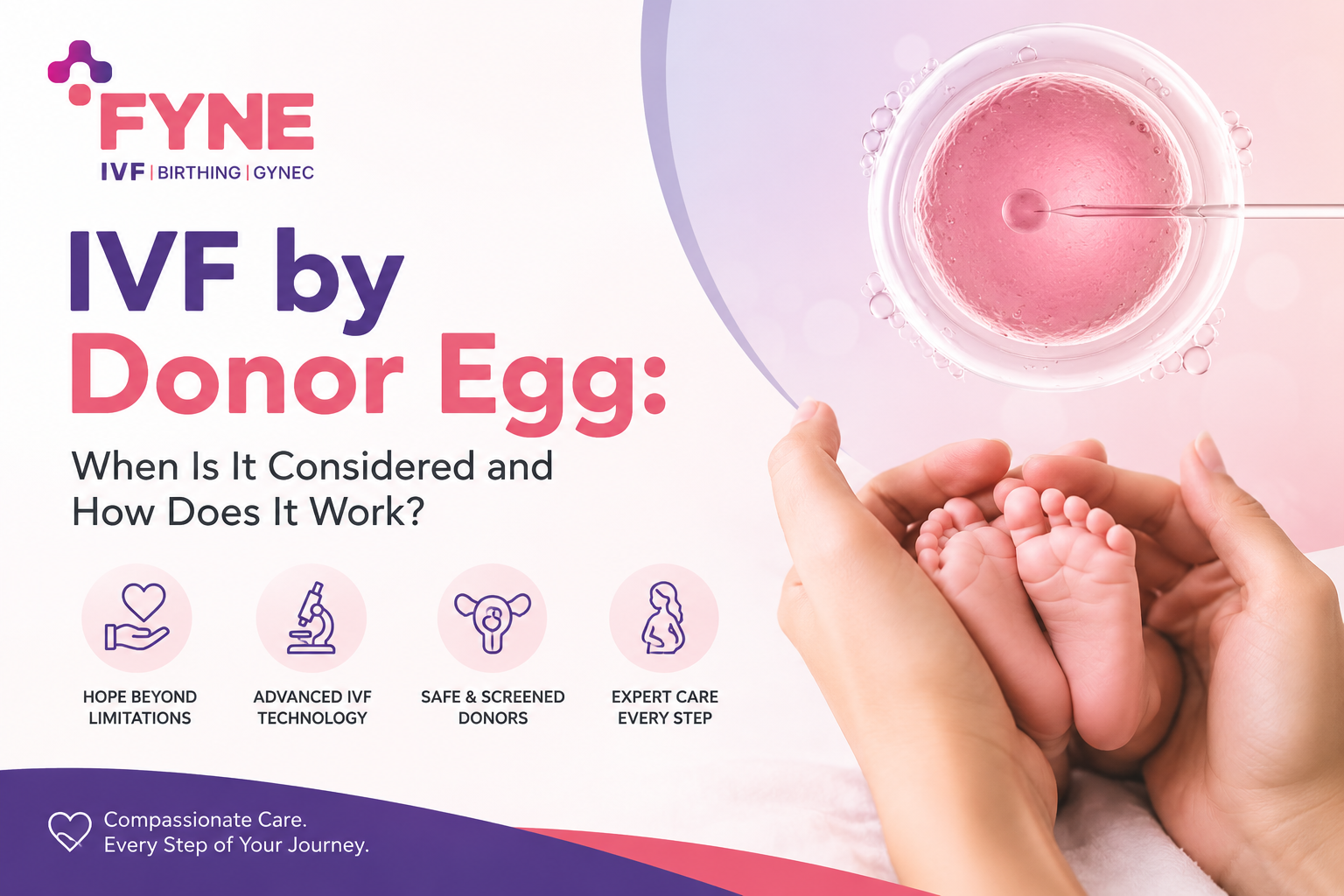
For many women, the hope of carrying a pregnancy does not fade even when their own eggs are no longer a viable path to it. Whether due to age, a medical condition, or a fertility journey that has not gone as expected, there comes a point for some, where donor eggs shift from being an unfamiliar term to a genuine, hopeful option.
Donor egg IVF has helped many women and couples build their families when using their own eggs was no longer realistic; and understanding when it is considered and how it actually works can make the decision feel far less daunting.
What Is Donor Egg IVF?
Donor egg IVF, sometimes described simply as IVF and egg donation, is a form of in vitro fertilisation that uses eggs from a screened, healthy donor instead of the intended mother’s own eggs. These donor eggs are fertilised in the lab, either with a partner’s sperm or donor sperm, and the resulting embryo is transferred into the recipient’s uterus.
The pregnancy itself, from implantation through to delivery, is carried by the intended mother in the same way as any other IVF pregnancy. What changes is the genetic origin of the egg, not the experience of pregnancy, childbirth or motherhood that follows.
When Is Donor Egg IVF Considered?
Donor egg IVF tends to come up in conversation once other paths to pregnancy using a woman’s own eggs have become unlikely to succeed. It is generally considered when:
- Ovarian reserve is significantly diminished, often related to age
- Premature ovarian failure or early menopause has occurred
- Previous IVF cycles using the woman’s own eggs have repeatedly failed
- A genetic condition that could otherwise be passed on to a child
- Egg quality has been affected by cancer treatment or other medical therapy
- A same sex male couple or single man is building a family and needs an egg source
For many women, this conversation follows a difficult stretch of failed cycles or diagnoses, which is why it often comes with a mix of emotions rather than a purely clinical decision.
Donor Egg IVF in Pune: How Does the Process Work?
Donor egg IVF follows a structured sequence, though the pace and personal experience of it varies from person to person.
Consultation
A fertility specialist reviews your medical history and discusses whether donor eggs are the right path forward.
Donor selection
A donor is chosen from a pool of screened candidates, matched where possible on physical characteristics and medical background.
Synchronisation
While the donor undergoes ovarian stimulation and egg retrieval, the recipient’s uterus is hormonally prepared to receive an embryo, with the two cycles carefully timed together.
Fertilisation and culture
Once retrieved, the donor eggs are fertilised in the lab, and the resulting embryos are cultured for several days.
Embryo transfer
The healthiest embryo is selected and transferred.
Pregnancy test and monitoring
A pregnancy test typically follows around two weeks after transfer, with monitoring continuing through the early stages if the result is positive.
For women in Pune considering this route, having access to a clinic that manages donor screening, cycle synchronisation and embryology under one roof tends to make an already emotional process considerably more manageable.
Donor Egg IVF Success Rate
One of the most common questions couples ask is how likely donor egg IVF is to succeed. A peer reviewed analysis of fertility clinic data found that just over 55% of fresh donor egg embryo transfers resulted in a live birth, a rate that holds fairly steady across recipient age groups since donor eggs typically come from women in their twenties.
This is one of the notable differences between donor egg IVF and standard IVF using a woman’s own eggs, where success rates decline meaningfully with age. Because the eggs come from a younger, healthy donor, the age of the woman carrying the pregnancy affects outcomes far less than it would with her own eggs, which is one reason donor egg IVF is often recommended once a woman’s own egg quality has become a limiting factor.
Choosing and Screening a Donor
Donor selection is one of the more emotionally significant parts of this process for many intended parents. Donors typically go through detailed medical, genetic and psychological screening before being accepted into a program, and intended parents are usually given access to profiles covering physical traits, educational background, and health history, while donor identity itself remains protected.
This screening exists to protect both the donor and the future child, ensuring that known genetic or infectious health risks are ruled out before a cycle begins.
Take the Next Step in Your Donor Egg IVF Journey
Donor egg IVF has given many women and couples a realistic path to pregnancy when their own eggs were no longer part of the equation. Understanding when it is considered and how the process actually works can make a difficult decision feel more like an informed one.
If you are exploring donor egg IVF or want to understand whether it is the right option for you, Fyne IVF’s team in Pune can walk you through donor matching, cycle planning and what to expect at every stage. Book an appointment today to discuss your options for fertility treatment in Pune.
FAQs
Will the child be genetically related to me?
The child will be genetically related to the sperm source but not to the woman carrying the pregnancy, since the egg comes from the donor. Many parents describe the pregnancy, birth and bond that follows as no different to any other.
Is there an age limit for donor egg IVF?
Most clinics set an upper age limit for the recipient, generally around the early to mid fifties, based on the physical demands of pregnancy rather than the source of the egg itself.
How is a donor matched to me?
Matching is usually based on physical characteristics, blood type and, where relevant, ethnic background, alongside a detailed medical and psychological screening of the donor.
Does using a donor egg increase the chance of multiple pregnancy?
Not inherently. This depends more on how many embryos are transferred, which your fertility specialist will discuss with you based on embryo quality and your individual circumstances.
How many cycles are usually needed?
Many women achieve a pregnancy within the first or second embryo transfer, though this varies based on embryo quality and uterine receptiveness.