Category: Egg Freezing & Preservation

  • What Every Woman Should Know About Ovarian Reserve & Egg Freezing

    What Every Woman Should Know About Ovarian Reserve & Egg Freezing

    Fertility is often not something women think about until they’re ready to start a family. However, ovarian reserve, the number of eggs in a woman’s ovaries, plays a critical role in determining fertility potential. Whether you’re considering starting a family now or planning for the future, understanding your ovarian reserve and options like egg freezing can provide valuable insights into your reproductive health.

    In this blog, we’ll explore the importance of ovarian reserve, the role of egg preservation, and the process of freezing eggs and embryos, empowering you to make informed decisions for your future family planning.

    What is an Ovarian Reserve?

    Ovarian reserve refers to the number and quality of eggs a woman has in her ovaries. It plays a major role in determining fertility, as a woman is born with a finite number of eggs that decrease in both quantity and quality over time.

    As women age, their ovarian reserve naturally decreases, which can affect the chances of conception. Ovarian reserve is typically assessed through blood tests measuring hormone levels (such as AMH and FSH) and ultrasound, along with other fertility assessments.

    How It Impacts Fertility and Reproductive Planning

    A woman’s ovarian reserve can impact:

    • Fertility potential: Lower ovarian reserve can make conception more difficult.
    • Response to fertility treatments: Women with a reduced ovarian reserve may have fewer eggs to retrieve during IVF cycles.
    • Timeframe for family planning: A low ovarian reserve might indicate a shorter fertility window, prompting earlier family planning.

    Signs of Diminished Ovarian Reserve and When to Get Tested

    While ovarian reserve naturally decreases with age, certain factors can accelerate the process. Some signs of diminished ovarian reserve include:

    • Difficulty getting pregnant
    • Irregular or missed periods
    • Early menopause in the family
    • History of medical treatments that may impact fertility (e.g., chemotherapy)

    If you are in your late 20s or early 30s and are considering delaying pregnancy, it may be wise to get tested for ovarian reserve. Early testing provides valuable information, helping you make informed choices about your reproductive health.

    The Role of Egg Preservation

    Egg preservation (or egg freezing) is the process of harvesting, freezing, and storing a woman’s eggs for future use. This allows women to delay pregnancy and safeguard fertility until a time when they feel ready. Women may choose to freeze their eggs for various reasons, including:

    • Age-related fertility decline: Women in their late 20s or early 30s may freeze eggs to preserve fertility before it naturally declines.
    • Medical reasons: Women facing treatments like chemotherapy or radiation that can affect ovarian function may use egg freezing as a method to preserve their fertility.
    • Lifestyle reasons: Women who wish to delay having children for career, relationship, or personal reasons may choose egg preservation as an option to ensure they have healthy eggs for future use.

    Overview of Success Rates and Benefits

    Egg preservation success depends on factors such as the age at which eggs are frozen and the quality of the eggs retrieved. Research indicates that:

    • Egg freezing success rates are higher in women under 35 years of age.
    • Frozen eggs can remain viable for years, giving women more flexibility in planning their pregnancies.

    Step-by-Step Breakdown of How Egg Freezing Works

    1. Ovarian Stimulation: The first step involves hormonal medications to stimulate the ovaries to produce multiple eggs.
    2. Monitoring: Throughout the stimulation process, the progress of the eggs is monitored with blood tests and ultrasounds to track hormone levels and egg growth.
    3. Egg Retrieval: Once the eggs are mature, a minor surgical procedure is performed under sedation to retrieve the eggs from the ovaries.
    4. Freezing & Storage: The retrieved eggs are frozen and stored in cryopreservation tanks, ready for future use when the woman is ready for pregnancy.

    Timeline and What to Expect

    The egg freezing process typically takes about 10–14 days from the start of ovarian stimulation to egg retrieval. The actual retrieval procedure is quick and minimally invasive, with most women resuming normal activities within a day or two.

    Debunking Myths About Egg Freezing

    • Myth: “Egg freezing guarantees future pregnancy.”

    Reality: While egg freezing increases the chances of pregnancy later, it’s not a guarantee, and success depends on several factors, including age and egg quality.

    • Myth: “Egg freezing is only for women over 35.”

    Reality: Egg freezing is beneficial for women of various ages, especially those in their late 20s or early 30s, who want to preserve fertility for the future.

    Emotional and Financial Considerations

    While egg freezing offers significant benefits, it’s important to be aware of the emotional and financial commitments. The process requires time, effort, and an understanding of the costs involved, which may include hormonal stimulation, monitoring, egg retrieval, freezing, and storage fees.

    Conclusion: Empowering Women to Make Informed Choices

    Understanding ovarian reserve and the options for egg preservation is essential for women who wish to have more control over their reproductive future. Whether due to age, medical reasons, or lifestyle choices, egg freezing offers a viable option for those looking to delay pregnancy while maintaining fertility. By learning more about the egg freezing procedure, embryo freezing, and the factors that affect success, women can make confident decisions about their fertility and take proactive steps toward family planning.

    Ready to Take Control of Your Fertility?

    If you’re considering egg freezing or want to learn more about how ovarian reserve affects your fertility, FYNE IVF is here to guide you every step of the way. With over 23 years of experience and a compassionate team, Dr. Deepali Chinchole specialises in fertility preservation and offers personalised care tailored to your needs. Book your consultation today to learn more about the egg freezing process and how we can support your fertility goals.
  • How IVF and Egg Donation Are Combined for Higher Success Rates

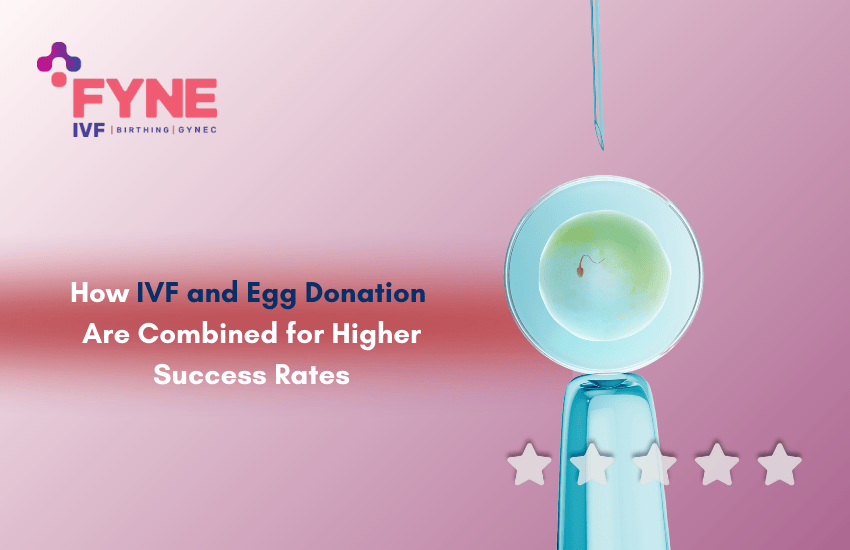
    How IVF and Egg Donation Are Combined for Higher Success Rates

    In vitro fertilisation (IVF) has been a life-changing advancement for countless individuals and couples facing infertility. For some, combining IVF with egg donation offers the best chance of achieving pregnancy, especially when factors like advanced maternal age, poor egg quality, or genetic conditions are involved. In this blog, we’ll walk you through how IVF and egg donation work together, the egg donation procedure, and why this combination often leads to higher success rates.

    What Is Donor Egg IVF?

    Donor egg IVF is a fertility treatment in which a healthy egg from a donor is fertilised with sperm (either from a partner or donor), and the resulting embryo is implanted into the uterus of the intended parent or a gestational carrier.

    This method is often recommended when:

    • The patient’s eggs are not viable
    • The woman has experienced repeated IVF failures
    • There is a risk of passing on genetic disorders
    • The patient is of advanced maternal age (usually over 40)

    Who Can Benefit from Egg Donation?

    Egg donation offers hope to many individuals and couples, including:

    • Women with low ovarian reserve or poor egg quality
    • Women with premature ovarian failure
    • Cancer survivors who’ve lost fertility due to treatment
    • LGBTQ+ couples or single intended parents
    • Those who have gone through multiple unsuccessful IVF cycles

    The Egg Donation Procedure Step-by-Step

    Whether you’re an intended parent or curious about how egg donation works, here’s a simplified breakdown of the process:

    1. Donor Selection

    Intended parents can choose from anonymous or known donors. Medical history, genetic screening, and physical characteristics are considered during selection.

    2. Synchronisation

    The donor and recipient’s menstrual cycles are synchronised using medications to ensure optimal timing for egg retrieval and embryo transfer.

    3. Egg Retrieval

    The donor undergoes controlled ovarian stimulation for 10–12 days. Mature eggs are then retrieved using a minimally invasive procedure under sedation.

    4. Fertilisation

    The donor eggs are fertilised with sperm in a lab. In some cases, ICSI (Intracytoplasmic Sperm Injection) is used to enhance fertilisation rates.

    5. Embryo Development

    The fertilised eggs are cultured for 3–5 days until they develop into embryos. Embryo quality is assessed before transfer.

    6. Embryo Transfer

    One or more embryos are transferred into the recipient’s uterus. Any remaining viable embryos may be frozen for future use.

    7. Pregnancy Test

    A blood test is done approximately 2 weeks after the embryo transfer to confirm pregnancy.

    Why IVF with Egg Donation Has Higher Success Rates

    Using donor eggs in IVF typically results in higher success rates for several reasons:

    1. Younger, Healthier Eggs

    Egg donors are usually women under 32 years of age with no history of infertility. Their eggs tend to have better quality, which improves the chances of fertilisation and healthy embryo development.

    2. Lower Risk of Chromosomal Abnormalities

    Since egg quality declines with age, older women using their eggs face higher risks of chromosomal issues. Donor eggs reduce this risk and increase the chance of a healthy pregnancy.

    3. Improved Uterine Environment

    The recipient’s uterus is prepared in advance to be as receptive as possible. Without the added strain of ovarian stimulation, the uterine lining is often in better condition for implantation.

    4. High Live Birth Rates

    Studies show that live birth rates with donor egg IVF are consistently high, even in women in their 40s or those with a history of infertility.

    Is Donor Egg IVF Right for You?

    Choosing IVF with egg donation is a deeply personal decision. While it offers high success rates, it also involves emotional, financial, and ethical considerations. Today, IVF clinics provide complete counselling and support at every stage, whether you’re exploring this path for the first time or transitioning after other fertility treatments.

    Final Thoughts

    Combining IVF and egg donation opens up new possibilities for people who may have lost hope. With the use of healthy donor eggs and advanced reproductive techniques, many patients experience a renewed chance at parenthood with success rates that are often significantly higher than standard IVF.

    Trust FYNE IVF for a Seamless Fertility Journey

    If you’re considering donor egg IVF or want to know more about the egg donation procedure, we’re here to help. Book a consultation with Fyne IVF to take the next step in your fertility journey with care, expertise, and hope by your side.


    FAQs

    1. Q: What is donor egg IVF?
      A: It’s a type of IVF where eggs from a healthy donor are fertilised and transferred to the intended parent’s uterus, often used when the patient’s own eggs are not viable.
    2. Q: Who qualifies for IVF with donor eggs?
      A: Women with poor egg quality, early menopause, repeated IVF failures, or genetic conditions, as well as LGBTQ+ couples and single parents.
    3. Q: Is the egg donation procedure safe for donors?
      A: Yes, donors undergo thorough screening and are monitored closely during the process, which includes hormonal stimulation and egg retrieval under sedation.
    4. Q: Can I choose my egg donor?
      A: Yes, most fertility clinics offer profiles of anonymous or known donors, allowing you to select based on medical and personal criteria.
    5. Q: Are success rates higher with donor egg IVF?
      A: Yes, especially for women over 40 or with previous IVF failures, as younger donor eggs tend to lead to higher fertilisation and pregnancy rates.
  • Is Frozen Embryo Transfer Better Than Fresh IVF Cycles?

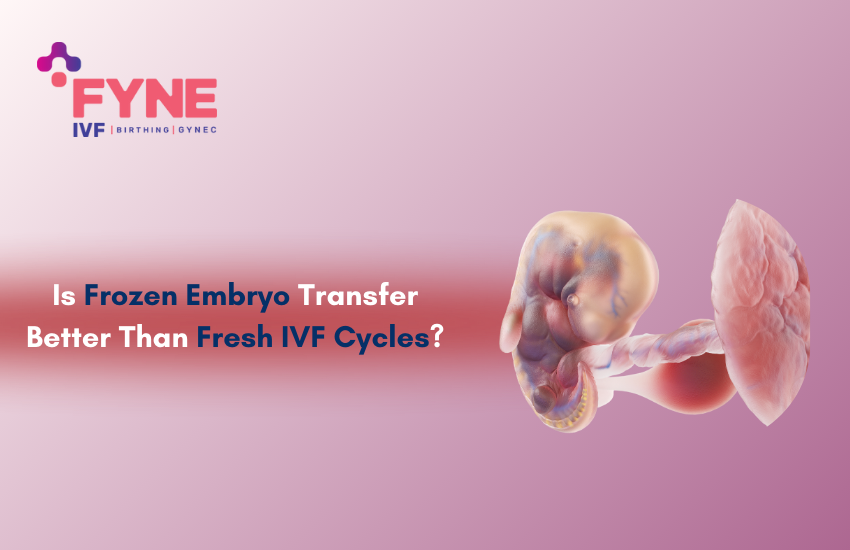
    Is Frozen Embryo Transfer Better Than Fresh IVF Cycles?

    When considering IVF treatment, one common question patients ask is whether a frozen embryo transfer (FET) is better than a fresh embryo transfer. With advancements in fertility treatments, both approaches are widely used, but choosing the right one can make a significant difference in outcomes depending on your individual situation. In this blog, we’ll explain the difference between the two, compare their processes, success rates, pros and cons, and help you understand which option might be best for you.

    What Is the Difference Between Fresh and Frozen Embryo Transfers?

    Both fresh and frozen embryo transfers are part of in vitro fertilisation (IVF), where eggs are fertilised outside the body to form embryos. The main difference lies in when the embryo is transferred to the uterus.

    • Fresh Embryo Transfer: After egg retrieval and fertilisation, the embryo is transferred to the uterus within 3 to 5 days, during the same cycle.
    • Frozen Embryo Transfer (FET): The embryos are frozen (cryopreserved) and stored. The transfer takes place in a later menstrual cycle, once the uterus is optimally prepared.

    Each method has its benefits, and the right choice relies on your body’s hormonal response, medical history, and fertility goals.

    FET vs. Fresh IVF: The Process Step by Step

    Let’s break down the steps involved in each:

    Fresh Embryo Transfer:

    1. Ovarian stimulation using hormones
    2. Egg retrieval
    3. Fertilisation of eggs in the lab
    4. Embryo transfer within 3–5 days
    5. Pregnancy test after two weeks

    Frozen Embryo Transfer (FET):

    1. Ovarian stimulation and egg retrieval (initial IVF cycle)
    2. Embryo freezing
    3. Uterine lining preparation (in a future cycle)
    4. Thawing and transferring the embryo
    5. Pregnancy test after two weeks

    With FET, your body has time to return to its natural hormonal state, which can lead to better embryo implantation conditions for some patients.

    Are Success Rates Higher with Frozen Embryo Transfers?

    In recent years, several studies have shown that FET can offer equal or even higher success rates compared to fresh embryo transfers. Benefits observed with FET include:

    • Improved implantation rates due to better endometrial receptivity
    • Reduced risk of complications like Ovarian Hyperstimulation Syndrome (OHSS)
    • Higher live birth rates in women with PCOS or hormone sensitivity

    However, results can vary based on age, embryo quality, and other medical conditions. A personalised approach is always key.

    Pros and Cons of Frozen vs Fresh Embryo Transfers

    Let’s look at the advantages and considerations of both options.

    Advantages of Frozen Embryo Transfer:

    • More time for the uterus to recover from stimulation drugs
    • Lower risk of OHSS
    • Flexible scheduling for patients and doctors
    • Higher success in women with certain hormonal issues

    Advantages of Fresh Embryo Transfer:

    • Faster IVF process, no need to wait for another cycle
    • Less expensive (no freezing or storage costs)
    • Preferred for some younger women with healthy hormone profiles

    Things to Consider:

    • FET involves additional preparation and cost for freezing and thawing
    • Fresh transfers may not be ideal if hormone levels are too high after stimulation
    • Emotional stress can be higher with back-to-back IVF and transfer in fresh cycles

    Who Should Consider a Frozen Embryo Transfer?

    FET is often a better option for:

    • Women with polycystic ovary syndrome (PCOS)
    • Patients with high estrogen levels or poor uterine lining during the IVF cycle
    • Couples who want to genetically test embryos before transfer
    • Individuals seeking to delay pregnancy after egg retrieval

    Fresh transfer may still be suitable for women with the following:

    • Normal hormone levels
    • Younger age and high-quality embryos
    • A strong response to stimulation without OHSS risk

    The Bottom Line

    So, is frozen embryo transfer better than a fresh IVF cycle? The answer depends on your body, health history, and goals. FET offers promising success rates and is often recommended for patients with hormonal imbalances or previous IVF failures. On the other hand, fresh transfers can be quicker and more cost-effective for the right candidates.

    Schedule Your Consultation at FYNE IVF Today!

    Still unsure which option suits you best? Talk to our fertility experts at Fyne IVF. We’ll evaluate your case and design a personalised treatment plan that gives you the best chance of success. Book Your Appointment Now!


    FAQs

    What is the main difference between a fresh and frozen embryo transfer?

    A fresh transfer uses embryos created and transferred in the same cycle, while a frozen transfer uses embryos that were created earlier and stored for future use.

    Does frozen embryo transfer increase the chances of pregnancy?

    For many patients especially those with hormonal imbalances, FET can improve success rates due to a more stable uterine environment.

    How long do frozen embryo transfer cycles take?

    Typically, 4–6 weeks, including uterine lining preparation, embryo thawing, and the transfer process.

    Is FET more expensive than fresh embryo transfer?

    FET may involve additional costs for freezing, storage, and thawing, but may be more cost-effective in the long run due to higher success in certain cases.

    Can anyone choose a frozen embryo transfer over a fresh one?

    While many patients are eligible, your fertility doctor will evaluate your hormone levels, age, and medical history to recommend the best option.