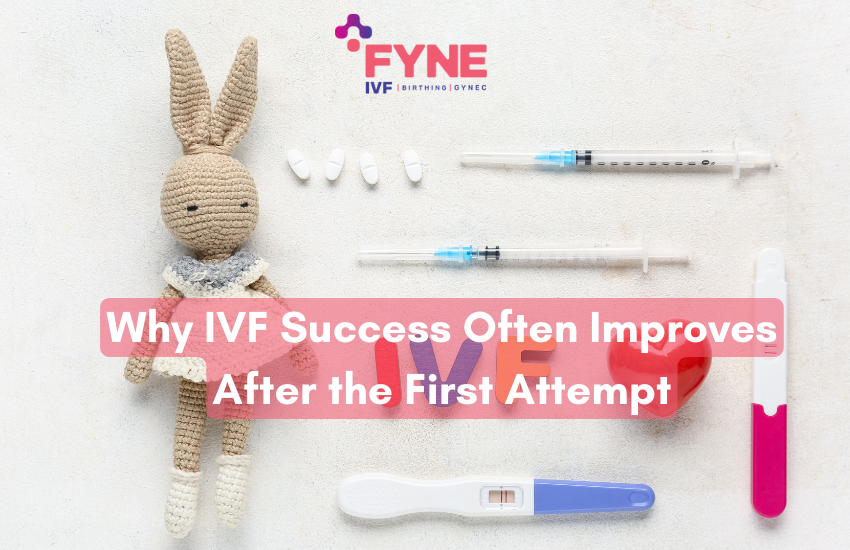
A failed first IVF cycle can be one of the most emotionally challenging moments in a fertility journey. Patients often question whether trying again makes sense or fear that failure will repeat itself. While the disappointment is real, the first IVF cycle often provides crucial information that helps improve outcomes in subsequent attempts. IVF success after the first failed cycle is not uncommon when treatment is reviewed thoughtfully and adjusted based on real data.
This blog provides her clinical insights on why IVF may fail initially and how outcomes can improve with personalised changes. The purpose of this blog is to help patients understand what happens after a failed IVF cycle and how informed next steps can increase the chances of success.
Why the First IVF Cycle Often Acts as a Learning Phase
The first IVF cycle helps doctors understand how the body responds to stimulation, how eggs fertilise, how embryos develop, and how the uterus responds to transfer. No two individuals respond exactly the same way, which is why predictions before treatment are not always accurate.
Failure in the first attempt does not indicate a poor prognosis. It usually means that adjustments are needed based on observed responses rather than assumptions.
A Failed IVF First Attempt Does Not Define Future Outcomes
Many patients assume that if IVF fails once, it will fail again. This is rarely true. The first cycle provides valuable insight into egg maturity, fertilisation rates, embryo quality, and implantation factors.
Doctors use this information to refine the treatment plan, making the second attempt more personalised and often more effective.
Reasons for IVF Failure in the First Cycle
Several factors can contribute to IVF failure in the first cycle. These may include egg quality, sperm factors, embryo development challenges, or uterine receptivity issues. Hormonal imbalance, suboptimal stimulation protocols, or timing mismatch during embryo transfer can also affect outcomes.
These factors are not always predictable before treatment begins and often become clear only after observing the first cycle response.
What Happens After Failed IVF
After a failed IVF cycle, doctors conduct a detailed review of the entire process. This includes stimulation response, number of eggs retrieved, fertilisation outcomes, embryo quality, and implantation response.
Based on this review, additional tests may be suggested to assess uterine health, hormonal balance, or sperm quality. This review forms the foundation for improving the next cycle.
How the Second IVF Cycle Success Often Improves
IVF second-cycle success frequently improves because treatment is no longer based on estimates. Protocols are refined using data from the first cycle.
Common changes may include:
- Adjusting stimulation medication and dosage
- Modifying fertilisation methods
- Altering embryo transfer timing
- Considering frozen embryo transfer
- Addressing medical or metabolic factors
These targeted changes help increase precision and reduce guesswork.
Chances of Success in the Second IVF Cycle
The chances of success in the second IVF cycle are often higher because treatment is customised. While success cannot be guaranteed, many patients conceive in the second or third attempt when protocols are refined thoughtfully.
Setting realistic expectations remains important. Success depends on age, diagnosis, and response to treatment, but failure in the first cycle does not predict failure in future cycles.
Improving IVF Success Rate Beyond the Lab
Improving the IVF success rate involves more than laboratory techniques. Medical optimisation, such as managing thyroid health, blood sugar levels, and nutritional deficiencies, plays a role. Lifestyle factors like sleep, stress, and emotional well-being also influence outcomes.
Patients who feel informed and supported often cope better with treatment and recovery, which indirectly supports consistency and adherence to care.
In Conclusion
A failed first IVF cycle does not define future success. It provides valuable insights into how the body responds to treatment, allowing protocols to be refined. With careful review and targeted adjustments, many patients achieve improved outcomes in subsequent cycles through personalised, data-driven treatment planning.
Turning IVF Setbacks into Better Outcomes
At FYNE IVF, every IVF cycle is reviewed in detail to guide the next step with precision. If you have experienced a failed first IVF attempt, expert evaluation can help identify correctable factors and improve future outcomes. Personalised guidance supports confident decision-making and a clearer path forward in treatment. Book your consultation now!
FAQs
1. Can IVF work after a failed first attempt
Yes. Many patients achieve pregnancy after a failed first IVF cycle when treatment is adjusted based on cycle response.
2. Why does the first IVF cycle fail
The first cycle often helps doctors understand how the body responds to stimulation and where changes are needed.
3. Is the second IVF cycle more successful
In many cases, yes. The second cycle is usually more personalised, which can improve success rates.
4. How long should one wait before trying IVF again
The waiting period depends on medical recovery and individual circumstances, and should be decided with a fertility specialist.
5. Are additional tests needed after IVF failure
Additional tests may be recommended to identify correctable factors related to hormones, uterus, or sperm quality.