

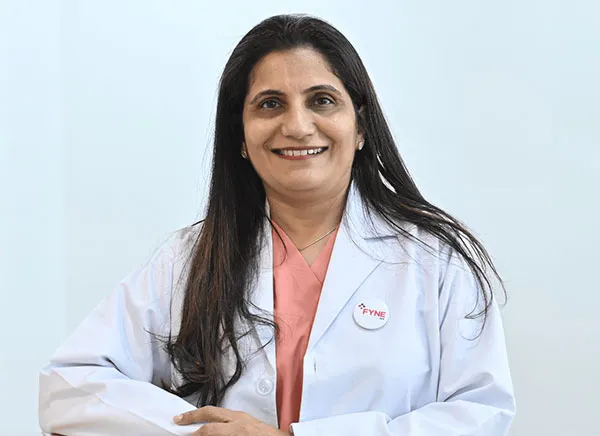
30+ Years Of Experience
In reproductive medicine.
Spearheading IVF
- Founded Vasantprabha Hitech Multispeciality Centre in Buldhana in 2002.
- Delivered the first test tube baby in Buldhana in 2007.
- Established Silverberries IVF & Fertility Clinic in Pune.
Social Contribution
- Leads initiatives against female foeticide through the ‘Lek Majhi’ movement.
- Spearheads cancer awareness campaigns in Pune.
World-Class Training & Fellowships
- MD in Obstetrics & Gynaecology
- Asia Pacific Institute of Embryology, Singapore Fellowship
- Royal College of Obstetricians and Gynaecologists (RCOG), London
Accomplishments
- Serving as the Medical Director at Accord Hospitals.
- Former Vice President of IMA, Buldhana.
- Former Treasurer of the Federation of Obstetric and Gynaecological Societies of India (FOGSI), Buldhana.
Pioneering IVF Techniques.
- Utilises advanced technologies for high success rates in fertility treatments.
Get personalized guidance and take the first step toward fulfilling your dream of becoming a parent.
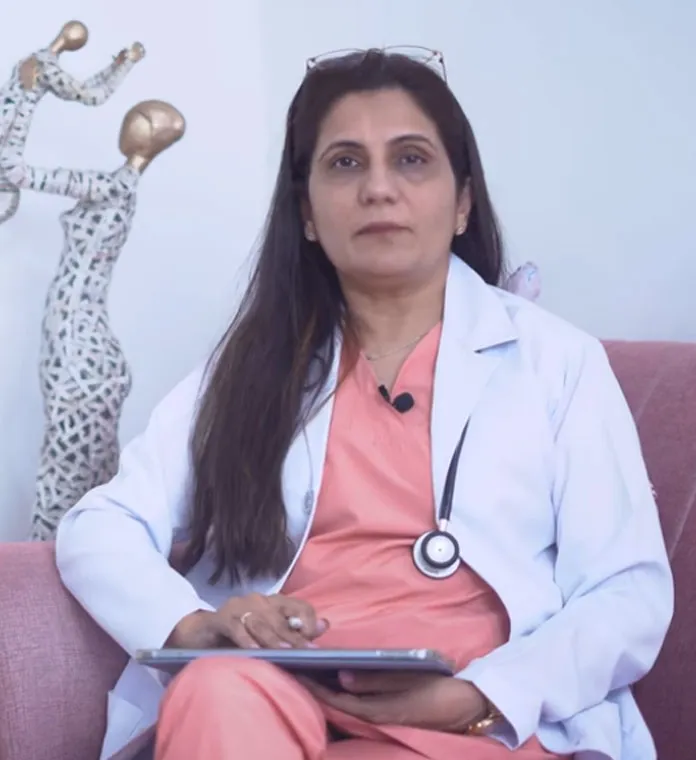
Success Stories of Happy Parents
Dr. Deepali, Dr Ananya and staff, we cannot express how grateful we are for everything you have done for us. You were the most caring, empathetic, and sincere support team we could have asked for during such a difficult time in our lives. You guided us through the most stressful and important journey of our lives, and we knew that, under your diligent care, everything would be okay. You have given us the most amazing gift in this world, and there is not a day that goes by that we don’t look at our precious new-born daughter without thinking of you and all that you did for us. The work you all do every day literally changes the lives of people like us forever. We feel so blessed to have found you and just wanted you to know that we are eternally grateful. Thank you again from the bottom of our hearts. We’ll be seeing you soon!
Dear IVF team, there are no words to express our gratitude for helping us become a family. Our daughter was born on November 2, and she has stolen our hearts. She is everything we dreamed about and more. We couldn’t have done it without you! Thank you for making our dream a reality.
We had been married for six years and were in our late thirties when we decided to start a family. However, getting pregnant wasn’t as easy as we had thought. We visited an IVF center and felt immediately comfortable with Dr. Deepali. She was honest and caring. After three failed IUIs, we decided to move forward with IVF. The IVF cycle went perfectly, and we were able to freeze three embryos and implant one, which led to a healthy full-term pregnancy and the birth of our baby in 2018. I am incredibly grateful to Dr.Deepali and Dr Vishal and their team for helping me through a dark and depressing time when I felt like I would never become a mother.
I am overjoyed to share that I have received positive pregnancy news, and I owe it all to the entire IVF team. I had come to them with a failed IVF cycle at another center, and I was emotionally shattered when I arrived. Since my first consultation at your IVF center, I have realized how different and diligently they handle things. The doctors team and embryologists kept me updated regularly on the processes. Today, I am so grateful to them for this positive news. I would like to thank the entire team for their hard work and dedication.
My children are now 3 years old. Even after 3 years, I can still vividly remember the kindness and compassion that Dr.Deepali showed me and my husband. I have PCOS, which made things difficult, and to complicate matters further, my eggs were not maturing. I had multiple rounds of failed insemination and a failed IVF round at another clinic. It was heart-breaking and sent me into a severe depression. I traveled several hours to Dr. Deepali ‘s clinic because I knew she was the answer, and she was. I brought along my medical records, which Dr.Deepali spent time reviewing. She came up with a plan tailored to my specific medical needs, and it worked. I now have two beautiful boys. I would not have had them without Dr. Deepali. She was patient and compassionate, even though I was not an easy patient to deal with. My anxiety was terrible, and the fear of another disappointment was overwhelming. Dr. Deepali holds a special place in my heart. I’ve never met a more compassionate or patient-oriented doctor. I am incredibly grateful for her and have the utmost respect for her.
Dr.Deepali and Dr. Vishal were amazing! They listened carefully to our situation, organized our processes perfectly, and were always available and willing to answer our many questions. This reduced our stress levels massively. The result of our egg donation cycle is our beautiful baby. The clinic was really good, and everyone was so helpful and positive. We are truly grateful to the doctor and the entire team for their hard work and dedication. Thank you for making our dream of having a family a reality!
We are incredibly grateful to Dr. Deepali and her team for their expertise and compassion. After a year of trying, she helped us conceive, and we are forever thankful. They made our journey to parenthood a reality.
“I just wanted to thank you again for the invaluable assistance you provided us on our journey to parenthood. Without your guidance and support, we would not have considered IVF, and we would not have been blessed with our little bundle of joy. You made the entire process seamless, and our questions and concerns were addressed promptly. The clinic was exceptional, and the staff highly professional. Our only regret is that we did not find you sooner. It would have saved us a lot of heartache, false promises, and, of course, money. Our little boy is now the apple of our eye, and we are proud parents of a happy and healthy child. We have no doubt that Your IVF Journey’s help, support, and commitment played a significant role in our journey, and we are forever grateful.”
Leading the Conversation on IVF
Choosing between single embryo transfer (SET) and multiple embryo transfer (MET) in IVF can shape your IVF journey. SET is known to be the safer, more recommended option, offering better outcomes for both mom and baby, while MET may increase risks of multiple pregnancies and complications. Afterall, it’s all about balancing safety with success.
When undergoing IVF, deciding between single embryo transfer (SET) and multiple embryo transfer (MET) can significantly impact the outcome of a pregnancy. Single embryo transfer (SET) is becoming the preferred approach globally, including in India, due to its association with better maternal and neonatal outcomes. The Indian Council of Medical Research (ICMR) also endorses SET for most cases, especially in women under 35, to minimize the risks associated with multiple pregnancies.
In contrast, multiple embryo transfer (MET), while potentially increasing the chances of implantation, is linked to higher rates of twins and triplets, which carry increased risks for miscarriage, gestational diabetes, preeclampsia, and premature birth. For older women or those with previous unsuccessful cycles, MET may still be considered based on individual circumstances.
Fertility clinics in India are increasingly following international best practices, such as the ESHRE and ASRM guidelines which recommend SET to improve the safety of IVF. Advancements in embryo selection techniques, such as preimplantation genetic testing (PGT)and improved culture systems, have made it possible to achieve high success rates with SET, even in older women.
Therefore, patients are encouraged to weigh the benefits of safety and success when considering SET over MET.
There’s a common misconception that infertility is primarily a women’s issue, but IVF has shown that male infertility is just as significant. However, with advancements like ICSI, TESE, and PGT, there are effective IVF solutions for men with sperm issues or genetic disorders as well.
In vitro fertilization (IVF) has revolutionized the treatment of male infertility, offering hope to couples who face challenges related to poor sperm quality or quantity. In cases where sperm counts are extremely low or there are issues with motility or morphology, IVF combined with intracytoplasmic sperm injection (ICSI) has proven to be an effective method. Scientific research published in the Journal of Human Reproductive Sciences highlights that ICSI, a technique where a single sperm is injected directly into the egg, significantly improves fertilization rates for men with severe sperm abnormalities.
Male infertility caused by obstructive or non-obstructive azoospermia (absence of sperm in the ejaculate) can also be treated using IVF, by retrieving sperm directly from the testes via testicular sperm extraction (TESE) or micro-TESE. Studies from Fertility and Sterility journals show that IVF with TESE or micro-TESE has resulted in successful pregnancies for men who otherwise could not father children.
In cases of genetic male infertility, such as Y-chromosome microdeletions or cystic fibrosis-related infertility, IVF with preimplantation genetic testing (PGT) allows for the selection of healthy embryos, reducing the risk of passing on genetic disorders. Research from the American Society for Reproductive Medicine (ASRM) indicates that PGT combined with IVF has been instrumental in improving pregnancy outcomes for men with genetic abnormalities.
Furthermore, advancements in sperm cryopreservation enable men with compromised fertility to preserve their sperm for future IVF cycles. The role of IVF in treating male infertility continues to expand, with improving technologies ensuring better outcomes for affected couples.
Vitamin D isn’t just the energy from sunlight—it also plays a significant role in fertility. It improves egg quality, sperm health, and uterine receptivity, making it essential to address any deficiencies before starting IVF. Keeping your vitamin D levels optimal can greatly enhance your chances of a successful pregnancy.
Vitamin D has been increasingly recognized as a factor influencing fertility and IVF outcomes, affecting both men and women. Research published in the Journal of Clinical Endocrinology and Metabolism indicates that vitamin D plays a crucial role in reproductive health by modulating sex hormone production and enhancing ovarian follicle development in women. Women with sufficient vitamin D levels tend to have higher levels of anti-Müllerian hormone (AMH), a marker of ovarian reserve, and improved IVF outcomes, such as higher rates of successful embryo implantation and clinical pregnancy.
In men, vitamin D affects sperm quality by enhancing motility and reducing oxidative stress. A deficiency in vitamin D has been linked to lower testosterone levels, poor sperm morphology, and reduced semen quality.
Women with optimal vitamin D levels during IVF treatment are more likely to achieve pregnancy and live births compared to those who were deficient. Moreover, vitamin D is thought to support the endometrium, making it more receptive to embryo implantation, which is critical in IVF success.
Given these findings, clinical guidelines now suggest that addressing vitamin D deficiency in both men and women prior to fertility treatments like IVF could improve reproductive outcomes. Regular monitoring and supplementation may offer a relatively simple intervention to enhance the chances of a successful pregnancy.